
ChatGPT 5.2 vs Gemini 3 Pro Review: Is the “Code Red” Update the Professional Powerhouse You Need?
Table of Contents
There is always that specific mix of adrenaline and apprehension when OpenAI drops a new model, isn’t there? But this time, the air felt different. The rumors of an internal “Code Red” at OpenAI had been swirling for days—a frantic, all-hands-on-deck response to Google’s Gemini 3 Pro suddenly taking the lead. We weren’t just getting a patch; we were getting a counterattack.
When I finally loaded up ChatGPT 5.2, I didn’t get the bubbly, chatty assistant I was used to with version 5.1. Instead, I encountered something that felt like a serious, high-priced consultant in a tailored suit—extremely capable, slightly cold, and entirely focused on getting the job done.
If you are wondering whether to switch your workflow to this new model, or if you are debating between the ChatGPT ecosystem and Google’s massive context windows, you are in the right place. I’ve dug through the benchmarks, developer tests, and the raw user sentiment to give you the honest truth about ChatGPT 5.2.
The “Code Red” Context: Why Now?
To understand this model, you have to understand the pressure cooker it was born in. Reports confirm that OpenAI accelerated this release specifically to counter Gemini 3 Pro. The goal wasn’t just to be “smart” anymore; it was to dominate professional knowledge work.
The result is a model family split into three distinct personalities:
- GPT-5.2 Instant: The fast, everyday workhorse.
- GPT-5.2 Thinking: The deep reasoner that pauses to plan before it speaks.
- GPT-5.2 Pro: The heavy-duty enterprise version designed for maximum accuracy.
This isn’t just a chatbot update; it’s a pivot toward agentic workflows—systems that can plan, execute, and correct themselves.
The Good: Where GPT-5.2 Becomes a Genius
If you use AI for complex problem-solving, the upgrade is undeniable. The “Thinking” model introduces a deliberate pause—similar to what we saw in experimental “o-series” models—where the AI maps out its logic before responding.
1. The Spreadsheet and Data King
For a long time, Claude was the go-to for data analysis, but 5.2 has come for the crown. In hands-on testing, users found that 5.2 didn’t just generate text tables; it successfully generated downloadable .xlsx files with functioning formulas, income entries, and conditional formatting that turned cells red when spending went over budget. It handles the structural logic of Excel far better than its predecessors.
2. One-Shot Coding Marvels
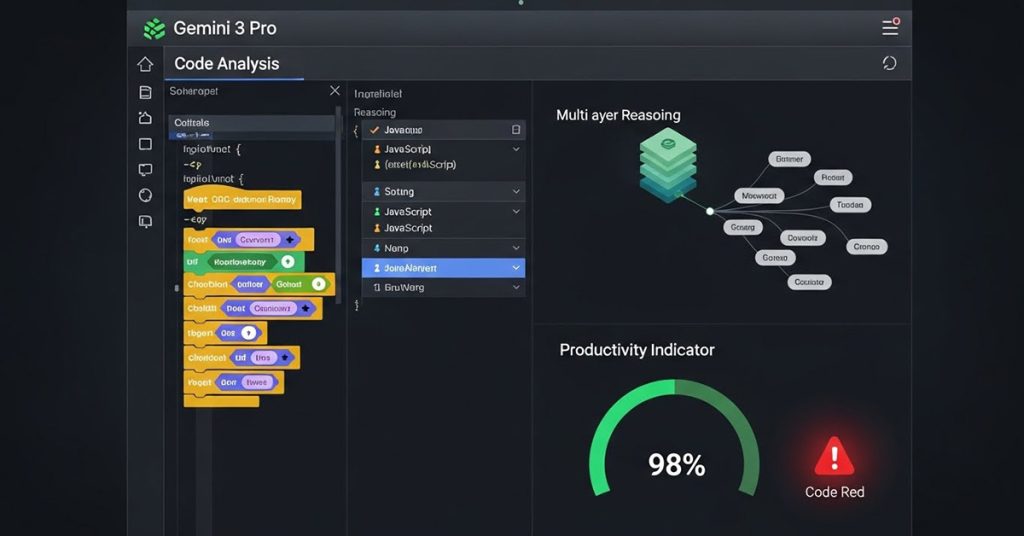
For developers, the “laziness” of previous models has been a constant headache. While 5.2 isn’t perfect (more on that later), its peak performance is startling. In one developer test, the model was asked to code a single-page HTML ocean wave simulation with realistic physics. It nailed it in one shot, creating a fully functional app with a polished UI.
This aligns with the SWE-bench Verified scores, where the Thinking model hit an impressive 80.0%. It is getting better at debugging and handling complex, multi-file architectures without needing as much hand-holding.
3. Vision That Actually Sees
We have all struggled with AI failing to read messy text. In a stress test involving a zoomed-in, pixelated image of a license plate, the Thinking model took nearly two minutes to process the image. That sounds like a long time, but the result was worth it: it correctly deciphered the alphanumeric string acting almost like a forensic analyst. It didn’t guess; it stared at the pixels until it figured it out.
The Bad: The “Corporate Nanny” Problem
Here is where the “warm and conversational” tone of the blog post has to get real. If you loved the friendly, “buddy” vibe of GPT-5.1/4o, you might find 5.2 jarring.
The Personality Freeze
User sentiment across forums and Reddit has been swift and harsh regarding the model’s tone. Users describe 5.2 as “cold,” “negative,” and “clinical.” It feels less like a creative partner and more like a compliance officer.
If you ask it to help with a creative story or a casual chat, you might get responses that feel stripped of personality. It seems OpenAI has over-indexed on efficiency and safety, sacrificing the human-like warmth that made 5.1 popular for casual use.
You might want to read this: The AI Arms Race: Can Turnitin AI Detection Really Catch GPT-5, Hybrid Texts, and AI Paraphrasers?
The Censorship Spike
This is the biggest complaint right now. The safety guardrails are arguably tighter than ever. Users have reported the model lecturing them on “safety” for benign requests—like asking for help with fantasy novel linguistics or World Building that involves mild conflict. It has been described as “paternalistic,” refusing basic tasks that previous models handled without blinking. If you are a creative writer or a roleplayer, you might find yourself fighting the model more than working with it.
Head-to-Head: ChatGPT 5.2 vs. Gemini 3 Pro
This is the comparison that matters. Which $20/month subscription deserves your wallet?
GPT‑5.2 vs Gemini 3 Pro
| Feature | GPT‑5.2 | Gemini 3 Pro |
|---|---|---|
| Context Window (Input) |
400k
|
1,000k
|
| Output Limit | 128k |
1,000k (input only) |
| Reasoning (GPQA Diamond) | 92.4% | Lower |
| Error Reduction | 30% fewer errors vs GPT‑5.1 |
— |
| Multimodality | Struggles with video/audio |
Native multimodal |
| Pricing (per million tokens) |
Input: $1.75
Output: $14.00 |
Input: $2.00
Output: $12.00 (under 200k) |
1. The Context Battle
Winner: Gemini 3 Pro Gemini 3 Pro boasts a massive 1 million token context window (input), compared to the roughly 128k output/400k input limits seen in the GPT ecosystem API. If your workflow involves dumping three entire novels, a 500-page PDF, and a video file into the chat and asking for a summary, Gemini is unmatched. It holds the “big picture” better without forgetting the beginning of the conversation.
2. Reasoning and Precision
Winner: ChatGPT 5.2 When the task requires strict logic, math, or following a complex set of instructions step-by-step, GPT-5.2 Thinking takes the lead. Benchmarks show it scoring 92.4% on GPQA Diamond (science questions), beating Gemini 3 Pro. It is less likely to hallucinate facts in these high-stakes scenarios, with OpenAI claiming a 30% reduction in errors compared to 5.1.
3. Multimodality
Winner: Gemini 3 Pro Google’s model is natively multimodal from the ground up. It handles video and audio inputs with a fluidity that GPT-5.2 still struggles to match. If you are analyzing video logs or need to interact with a lot of media, Gemini feels more natural.
4. Pricing (API Level)
Winner: It Depends If you are a developer, the pricing wars are heating up.
- GPT-5.2: Approximately $1.75 per million input tokens / $14.00 per million output.
- Gemini 3 Pro: Approximately $2.00 per million input / $12.00 per million output (for prompts under 200k).
GPT-5.2 is slightly cheaper to feed data into, but Gemini is cheaper to get data out of. However, remember that GPT-5.2 bills its internal “reasoning tokens” (the thinking process) as output, which can secretly inflate your bill on complex queries.
ChatGPT 5.2 vs Gemini 3 Pro: The Verdict, Who Should Upgrade?
Stick with GPT-5.1 if:
- You use AI for creative writing, brainstorming, or casual conversation.
- You hate being “lectured” by safety filters.
- You want a fast, snappy response without waiting for the model to “think.”
Switch to GPT-5.2 if:
- You are doing professional knowledge work (spreadsheets, reports, financial analysis).
- You are a coder who needs one-shot accuracy for complex scripts.
- You need to solve hard logic puzzles or math problems where precision is non-negotiable.
Switch to Gemini 3 Pro if:
- Your workflow involves massive documents (hundreds of pages) or video files.
- You are deep in the Google Workspace ecosystem.
- You find GPT-5.2’s context limit too restrictive for your project files.
Final Thoughts
ChatGPT 5.2 isn’t the fun upgrade; it’s the business upgrade. It’s the difference between a college study buddy and a tenured professor. The professor might be stricter, a bit stuffy, and less fun to hang out with at a party, but when you need to solve a differential equation or debug a legacy code base, you want the professor.
OpenAI has drawn a line in the sand: they are building tools for work, not friends for chatting. Whether that is the right direction depends entirely on what you need your AI to do.
FAQ
Is ChatGPT 5.2 free?
No, the advanced capabilities of GPT-5.2, including the Thinking and Pro models, are generally locked behind paid subscriptions like ChatGPT Plus, Team, or Enterprise. Free users typically remain on lighter models like GPT-4o-mini or limited versions of previous flagship models.
Why is ChatGPT 5.2 so slow sometimes?
If you are using the “Thinking” mode, the delay is intentional. The model is generating “reasoning tokens”—effectively talking to itself to plan, error-check, and outline the answer before showing it to you. This can take anywhere from a few seconds to over a minute for complex queries, but it usually results in higher accuracy.
Is GPT-5.2 better than Gemini 3 Pro for coding?
It is a tight race. GPT-5.2 often wins on “one-shot” accuracy for specific scripts and has superior reasoning for debugging logic. However, Gemini 3 Pro wins if you need to upload an entire massive codebase for context, thanks to its 1-million-token context window.
Does GPT-5.2 still hallucinate?
Yes, but significantly less than before. OpenAI claims a 30% reduction in hallucinations compared to GPT-5.1. In tests, it correctly identified the origins of quotes and facts that tripped up previous models, though you should always verify critical information.
Can I switch back to GPT-5.1?
Yes, currently OpenAI allows paid users to toggle between models. Many users are keeping 5.1 for creative writing and chatting while using 5.2 for math, coding, and data analysis.