
How AI-Powered Language Learning Games Forge English Conversational Fluency
If you’ve ever tried to speak English in a real-world setting—maybe talking to a neighbor, making a purchase, or attending a school meeting—you know the feeling: the immediate, paralyzing anxiety. That fear isn’t about intelligence; it’s a psychological barrier, born from the deep worry of making an “embarrassing” or “funny” mistake, causing the words to freeze up entirely.
For many English Language Learners, especially newcomers, this hesitation limits their social interaction and integration, even if they’ve diligently studied grammar rules and vocabulary lists.
Traditional learning methods, including many older digital apps, fail here because they simply don’t offer the safe, supportive, and customizable practice environment needed to overcome this confidence gap.
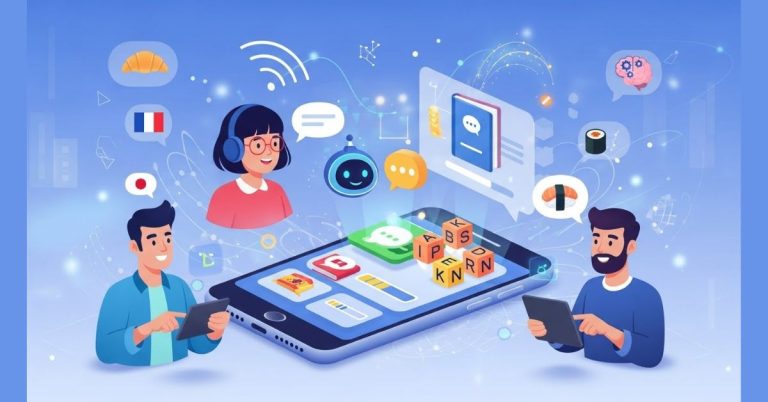
But what if I told you the solution involves leveling up inside an actual game? Welcome to the revolution of AI-powered language learning games, where cutting-edge technology is transforming fear into effortless conversation.
The Biggest Hurdle: Why Traditional Learning Leads to Speaking Anxiety
The core failure of many conventional English programs is their one-size-fits-all approach. They provide uniform curriculum and feedback that ignores individual needs, learning styles, or emotional states. This lack of personalization compounds the existing anxiety inherent in speaking a new language.
Overcoming the Psychological Barrier to Conversational English
Immigrants often hesitate to engage in unnecessary conversations because they risk being misunderstood or ridiculed. This burden severely limits motivation and bravery.
This is the sweet spot where Adaptive AI steps in. Research has shown that creating a structured, virtual environment—like a simulated city where players only interact with computer characters (Non-Player Characters or NPCs)—can effectively boost confidence and remove this language barrier, especially for absolute beginners. Since players are fully aware they are speaking to an AI, the pressure and fear of judgment dramatically decrease, allowing them to speak much more freely.
The Limitations of Fixed, Non-Adaptive Apps
Older applications often present a predetermined, fixed path of challenges and offer generic, uniform feedback. These applications are non-adaptive, meaning they lack the complexity to tailor content to an individual learner’s weaknesses or strengths. They might help with memorization, but they fail to provide the dynamic, context-aware dialogue essential for true conversational fluency.
You might want to read this: The Best Prompts to Learn English with ChatGPT: The Ultimate Guide to Persona, Role-Plays, and Fluency
The Future is Play: How AI-Powered Language Learning Games Work
Modern language learning platforms leverage sophisticated artificial intelligence, such as the powerful GPT-4o model, combined with Gamified Learning structures to create a highly personalized experience. This field, known as AI-enabled Adaptive Game-Based Language Learning (AI-AGBLL), is fundamentally changing how we acquire new skills.
Simulating Real-Life Interactions with AI and NLP
How does the game create a conversation that feels real? It relies on several key AI components, making the experience dynamic and deeply adaptive:
- Intelligent Agents (NPCs): These virtual characters perform autonomously, often serving as tutors or simulated residents of the game world. They analyze your actions and preferences, engaging you in targeted discussions. In a virtual city, these dynamic NPCs generate context-aware responses tailored to your skill level.
- Natural Language Processing (NLP): This technique is crucial for interpreting what you write or say, generating human-like conversation flow, and responding correctly to linguistic properties.
- Context-Aware Dialogue: The AI adjusts its vocabulary and grammar to stay close to the player’s language level, ensuring you are neither overwhelmed by content that is too complex nor under-challenged by easy conversation. It even pays attention if you seem hesitant, offering explanations to aid understanding.
The Role of the Adaptive Guide for English Beginners
One feature specifically designed to help absolute English Language Learners get started is the personalized guide.
This in-game guide:
- Follows the player throughout the virtual city, ready to help whenever needed.
- Can communicate with the player in their native language to provide immediate translation and clarification, reducing the anxiety of the unknown.
- Gradually adjusts its own language use, shifting away from the native tongue toward the target language (English), to encourage the player to decrease their reliance on translations and use English more frequently.
AI Game Mechanisms: How Technology Adapts to Your Needs
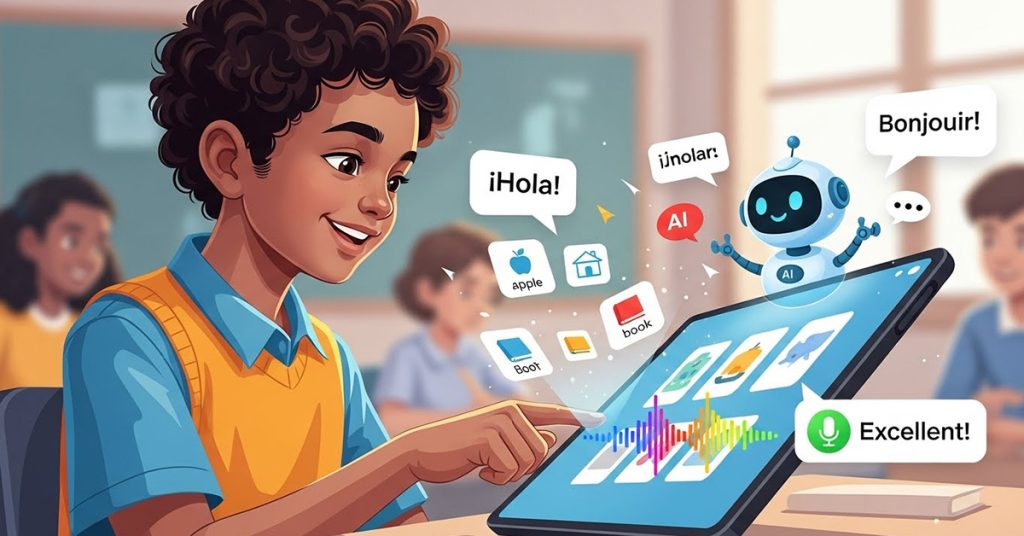
Adaptive AI isn’t just about conversation; it’s about constant assessment and calibration. The system uses a framework of adaptive learning models to ensure the content stays relevant and challenging.
Monitoring Behavior: In-Game Performance and Help-Seeking
The key to personalization lies in tracking what you do, not just what you say. The AI monitors various parameters to understand your proficiency and needs:
- In-Game Performance: This cognitive parameter is the most frequently examined indicator and acts as the baseline for understanding your proficiency level, allowing the AI to adjust the difficulty of learning material.
- Time on Task: How long are you spending trying to complete an activity?.
- Help-Seeking Behavior: How often are you requesting hints or translations? This behavioral indicator helps the AI infer precisely when to offer learning scaffolds or extra support.
Core Instructional Supports Delivered by Adaptive AI
Once the AI detects a need based on performance or behavior, it provides real-time adjustments through instructional supports:
- Adaptive Feedback and Prompts: These are suggestions, explanations for errors, or targeted questions designed to help you self-reflect and refine your language performance.
- Adaptive Language Contents: The AI automatically adjusts the difficulty level of the texts, vocabulary, or tasks presented to match your current proficiency level, improving your sense of confidence or self-efficacy.
- Adaptive Dialogues: The AI assistant is configured to generate dynamic, human-like, and context-aware responses tailored to your interaction history and preferences. These dialogues mimic real human conversation, which is often favored by learners as it reduces anxiety about verbal errors compared to practicing with human counterparts.
Data Snapshot: Effectiveness of Immersive RPG Gaming
Does this new model actually work? Initial studies of prototype AI Real-Life Simulation games designed to boost conversational confidence show strong results in engagement and efficacy.
In one study surveying participants on their experience with an adaptive RPG:
These findings highlight that immersive, adaptive game environments are demonstrably effective tools for language acquisition and motivation. While usability components, like tutorials and navigation guides, require polishing, the core goal of providing engaging and fun learning experiences is successfully met.
Beyond the RPG: Actionable Strategies for English Learners Using Gamified Tools
While sophisticated AI-AGBLL systems are the gold standard for conversational practice, you can use existing general AI tools and Gamified English platforms to personalize your learning journey right now.
Customizing Vocabulary with AI and Content Generators
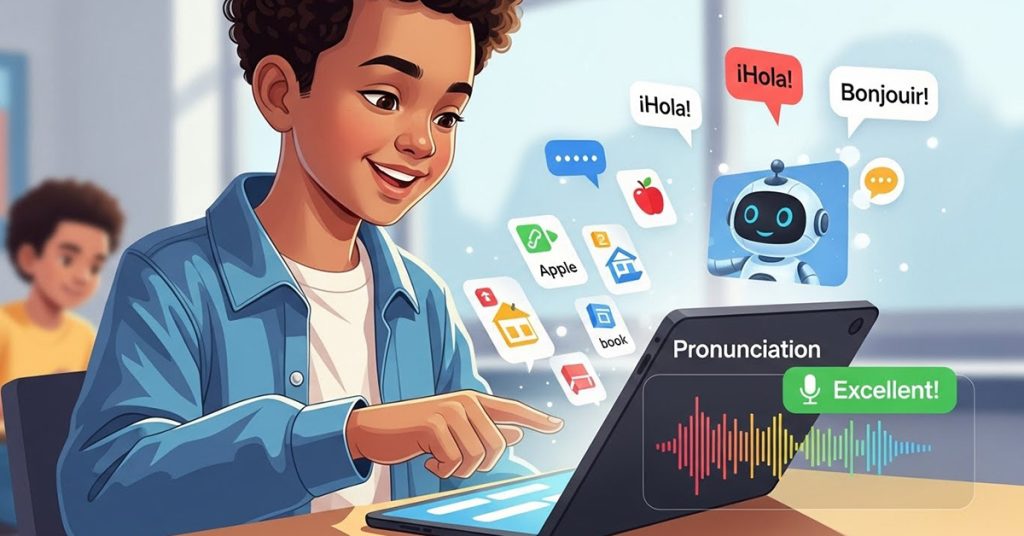
Vocabulary acquisition is a key focus area in game-based language learning. You can leverage large language models to create customized, highly relevant practice content:
- Generate Topic-Specific Content: Use an AI tool to request an article or text (e.g., 250–300 words) about a specific subject, like “football,” at a designated proficiency level (e.g., B1 level).
- Create Instant Gap-Fill Exercises: Take that generated text and, within the same platform, convert difficult or key vocabulary words into fill-in-the-gap exercises, immediately generating targeted practice around the words you need to master.
- Build Essential Word Lists: Have the AI generate a list of essential vocabulary words relevant to your chosen topic (e.g., Polish words for football) at your proficiency level (B1). You can then request a translation of those words and even generate a matching activity from the list.
The YouTube-to-Game Pipeline for Personalized Practice
For learners who prefer to derive their English practice directly from real-world media, this process uses several tools—YouTube, Google Translate, and Wordwall—to seamlessly integrate new vocabulary into gamified exercises:
- Source Material: Find YouTube videos that provide a written, downloadable transcript (not just automated subtitles).
- Capture and Translate: As you watch, copy unknown sentences from the transcript and paste them into a tool like Google Translate.
- Save the Context: Save the foreign language sentence (English) and its translation into a personalized word/sentence list.
- Gamify the List: Export this list into a spreadsheet format and then import the data into a gamified platform, such as Wordwall, to create a custom matching activity that helps you memorize the new, contextualized vocabulary. Wordwall offers over 30 activity types, including flashcards and sentence rearrangement, which can be edited and reused with new content.
The Roadblocks: Current Challenges in AI Game-Based Language Learning
While the future of AI Language Learning Games is bright, I must share some caveats. This technology is still evolving, and challenges exist:
- Technical Issues and Cost: Implementation can be technically complex and costly. Some prototype systems still struggle with user interface and navigation issues that detract from the learning experience.
- Initial Algorithm Limitations: In the prototype phase, the AI might not immediately find your exact language level, potentially using words that are initially too difficult or too basic until the model fully adjusts. These coarser AI algorithms need refinement.
- Inadequate Focus on Affective Needs: Many systems predominantly focus on cognitive (performance) and behavioral (help-seeking) data, but there is still a noted deficiency in tracking affective parameters—the user’s emotional state, anxiety, or engagement level. This means the AI may not recognize when a learner is becoming frustrated or experiencing cognitive overload.
- The Feedback Balance: While feedback is adaptive, overly explicit corrections might actually hinder a learner’s ability to develop independent problem-solving skills. Designers must continually tune the clarity and detail of feedback to encourage self-analysis of linguistic errors.
AI-Powered Language Learning Games FAQ
What is AI-enabled Adaptive Game-Based Language Learning (AI-AGBLL)?
AI-AGBLL refers to the use of digital games empowered by Artificial Intelligence (AI) to personalize the language learning process. These systems adapt the content, difficulty, and instructional support in real-time based on the learner’s behavior, performance, and cognitive needs.
How do AI-Powered Language Learning Games help overcome speaking anxiety?
AI games simulate real-world conversations in a safe, virtual environment with Non-Player Characters (NPCs). Since the player knows they are talking to an AI, the psychological burden and fear of judgment (or being laughed at) are significantly reduced, allowing them to practice speaking more freely and confidently.
What is a key feature in AI language games for English beginners?
A critical feature for English beginners is the personalized guide who follows the player in the game. This guide can initially speak in the player’s native language for clarification and gradually shifts toward the target language (English) to encourage active use of the new language.
Which language skills are prioritized in game-based learning research?
While gamified platforms cover all skills, current research in AI-AGBLL most frequently investigates improvements in reading and vocabulary skills. However, AI-powered RPG simulations focus heavily on improving speaking and Conversational Fluency.
How do AI systems know how to adjust the difficulty of the game?
AI systems adjust the difficulty based on monitoring parameters like the player’s in-game performance (a cognitive parameter) and help-seeking behavior (a behavioral parameter, such as asking for hints or translations). This data allows the AI to infer the learner’s proficiency and when to offer necessary support.
Can I use general AI tools like ChatGPT for conversational English practice?
Yes, general AI tools like ChatGPT are excellent for roleplay because they generate clear English with correct grammar. However, be cautious when asking about specific factual information, like grammar rules or pronunciation, as they have been observed to make mistakes in those areas.
How effective are AI language learning games?
Studies on adaptive language games show a generally positive outcome. For instance, a prototype RPG achieved an average rating of 9.0 out of 10 for learning effectiveness, suggesting they are highly successful in helping users acquire language.