

AI Video Generation Services: Digital Marketing Strategies and Sales Data Market Analysis Report
The global AI video generation market is experiencing explosive growth, valued at USD 614.8–706.6 million in 2024 and projected to reach USD 2,298.8–3,831.8 million by 2033, with compound annual growth rates (CAGR) ranging from 19.5% to 32.78%. This report provides a detailed analysis of market dynamics, competitive positioning, digital marketing strategies, and revenue models driving the AI video generation industry.
The market is fueled by rapid technological advancement, increasing demand for personalized content, and cost-effective solutions that traditional video production cannot match. Key findings include dominance of text-to-video generators (45% market share), Asia-Pacific’s leading regional position (31–37% market share), and widespread adoption among small and medium enterprises seeking scalable, affordable content creation.

Table of Contents
1. AI Video Generation Services Market Overview and Size
1.1 Current Market Valuation
The AI video generation market has demonstrated remarkable expansion over the past two years. Market researchers report varying valuations due to different segmentation methodologies:
| Research Firm | 2024 Value | 2030-2033 Projection | CAGR |
|---|---|---|---|
| MarkNtel Advisors | USD 0.43B | USD 2.34B (2030) | 32.78% |
| Grand View Research | USD 554.9M | USD 1.96B (2030) | 19.9% |
| Fortune Business Insights | USD 614.8M | USD 2.56B (2032) | 20.0% |
| Dimension Market Research | USD 706.6M | USD 3.83B (2033) | 20.6% |
| Market Research Future | USD 4.1B | USD 82.64B (2035) | 31.38% |
Table 1: Market Size Projections by Leading Research Firms (2024-2033)
The variance in projections reflects different market definitions and inclusion criteria. Conservative estimates (USD 554.9M–706.6M baseline) focus on core video generation platforms, while broader estimates including adjacent services and integrations project higher valuations. The consensus CAGR of approximately 20–32% demonstrates sustained double-digit growth exceeding the broader software-as-a-service (SaaS) sector growth rates.
1.2 Market Growth Drivers
Demand-Side Drivers:
- Scalable Content Production: Enterprises can generate thousands of videos at consistent quality, addressing production bottlenecks that limit traditional video marketing
- Personalization at Scale: AI enables customized video content for individual audience segments without proportional cost increases
- Cost Reduction: AI video generation reduces production costs by up to 80% compared to traditional production methods
- Speed to Market: Content can be created in minutes rather than weeks, enabling rapid iteration and optimization
- Digital Content Consumption: 82% of all consumer internet traffic is expected to be social media video by 2025, driving demand for high-volume content production
Supply-Side Drivers:
- Technological Advances: Improvements in model quality (Sora 2, Veo 3.1, Kling 1.5) deliver increasingly photorealistic outputs
- Cloud Infrastructure: Accessible computing power reduces barriers to deployment and scaling
- Competitive Pricing: Pricing democratization through subscription models makes tools accessible to SMBs
- Platform Integration: Native integrations with marketing automation, e-commerce, and social platforms streamline workflows
- Regulatory Clarity: Emerging AI governance frameworks (e.g., ISO 42001 certification for AI security) build enterprise confidence
2. Market Segmentation Analysis

2.1 Segmentation by Technology Type
Text-to-Video Generators (45% market share)
Text-to-video remains the dominant segment, valued at USD 284.3 million in 2024. This dominance reflects widespread accessibility—users without visual design expertise can generate videos via natural language prompts. Key players include OpenAI’s Sora, Google’s Veo, Runway’s Gen-4, and Kling.
AI Avatar and Synthetic Spokesperson Videos
Synthesia, HeyGen, and D-ID specialize in avatar-based video generation for corporate training, onboarding, and internal communications. This segment commands premium pricing due to professional presentation requirements and regulatory compliance needs.
Image-to-Video Animation
Tools like Runway, Luma Dream Machine, and Minimax convert static images into animated sequences. Used for product photography enhancement and creative effect application, this segment serves designers and content creators.
Document-to-Video Conversion
PowerPoint-to-video and PDF-to-video generators address enterprise training and documentation workflows, enabling automatic conversion of existing corporate assets.
2.2 Regional Market Distribution
| Region | 2024 Market Share | 2025 Projected Value | Growth Characteristics |
|---|---|---|---|
| Asia-Pacific | USD 150.2M+ |
Highest CAGR (23.8%)
Large SMB adoption
|
|
| North America | USD 165.8M+ |
20.3% CAGR
Early adoption; enterprise focus
|
|
| Europe | USD 165.8M+ |
Regulatory leadership
Growing adoption
|
|
| Rest of World | Varies |
Emerging middle-class digital adoption
|
Table 2: Regional Market Distribution and Growth Dynamics
Asia-Pacific Dominance reflects multiple factors: (1) massive social media user base (1+ billion daily video views), (2) smartphone penetration and affordable internet access, (3) large creator economy and influencer communities, (4) rapid digitalization of SMBs, and (5) government AI infrastructure investments in China, India, and Southeast Asia.
North America’s Scale stems from early enterprise adoption, mature SaaS infrastructure, established marketing budget allocations, and integration with existing marketing automation platforms.
2.3 Segmentation by Enterprise Size
Large Enterprises (56.2% market value in 2024)
Large enterprises lead in absolute spending due to higher budgets, need for scalability, and multi-market content localization requirements. They utilize AI video generation for:
- Brand storytelling and campaign video production
- Product demonstration and launch videos
- Quarterly earnings announcements and investor communications
- International market localization (60+ language support via platforms like Synthesia)
SMEs (43.8% market value, fastest growth)
Small and medium enterprises represent the fastest-growing segment. Nearly 90% of advertisers project GenAI creative to reach 40% of their ad spend by 2026, with SMBs adopting faster than enterprise. SMBs leverage AI video for:
- Social media marketing (TikTok, Instagram, YouTube)
- E-commerce product demonstration
- Low-cost advertising production
- Lead generation video campaigns
3. Competitive Landscape and Market Leaders
3.1 Major Market Players
Leading AI Video Generation Platforms
2025 Market Leaders
| Company | Primary Focus | Founded | Key Differentiator |
|---|---|---|---|
| Synthesia | AI Avatars & Corp Videos | UK |
|
| Runway ML | Text-to-Video & Editing | USA |
|
| OpenAI (Sora 2) | Cinematic Text-to-Video | USA |
|
| Google (Veo 3.1) | Advanced Text-to-Video | USA |
|
| HeyGen | AI Avatar Specialist | USA |
|
| Kling AI | Photorealistic Motion | China |
|
| Pika | Social-First Generation | USA |
|
| Pictory | Script-to-Video | India |
|
| DeepBrain AI | Avatar & Video Gen | South Korea |
|
| Lumen5 | Blog-to-Video Automation | Canada |
|
Table 3: Leading AI Video Generation Platforms (2025 Market Leaders)
Competitive Advantages Across Leading Platforms:
- Synthesia: Regulatory compliance and enterprise security (ISO 42001); ideal for highly regulated sectors
- Runway: Most comprehensive editing toolkit; strongest team collaboration; professional broadcast quality
- Sora 2 & Veo 3.1: Highest visual fidelity; integration with Google/OpenAI ecosystems
- Kling: Superior motion physics; photorealistic outputs; highest resolution capability
- HeyGen: Simplest user experience; fastest time-to-video for corporate users
- Pika: Social media optimization; highest engagement for TikTok/Instagram audiences
4. Digital Marketing Strategies for AI Video Generation Platforms
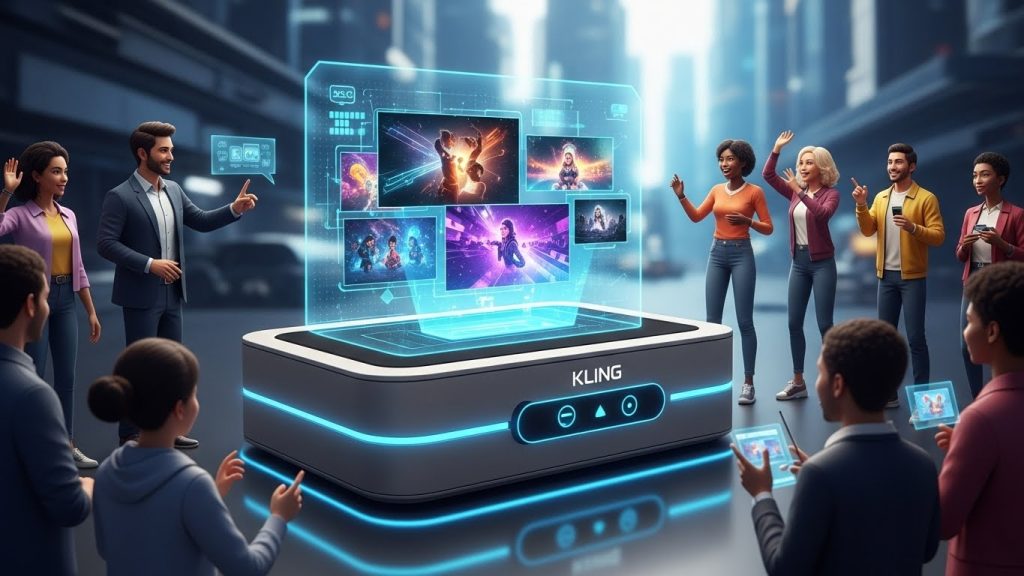
4.1 Customer Acquisition Funnel
AI video generation platforms employ sophisticated multi-stage acquisition strategies:
Awareness Stage:
- Content Marketing: Thought leadership through blog posts on video marketing trends (e.g., HeyGen’s “Video Marketing Strategies 2025”)
- Social Proof: Showcasing customer success stories and case studies (cosmetics brands creating localized content, eyewear retailers using virtual try-on)
- Educational Content: Free webinars on “Video Marketing ROI,” “AI for SMBs,” and “Content Personalization at Scale”
- Influencer Partnerships: Sponsoring YouTube creators and TikTok influencers demonstrating platform capabilities
Consideration Stage:
- Free Trials: All major platforms offer free tiers (300–720 credits, 3–10 minutes of video monthly) enabling risk-free evaluation
- Comparative Content: Detailed comparison guides (Runway vs. Synthesia vs. Pika) addressing specific use cases
- ROI Calculators: Cost-benefit analysis tools demonstrating savings vs. traditional production
- Segmented Landing Pages: Distinct messaging for enterprises (compliance, scalability), SMBs (affordability, ease), and creators (creative freedom)
Decision Stage:
- Freemium Conversion: Targeted email campaigns addressing free-tier users with upgrade incentives (50% off first paid month)
- Sales Team Engagement: Direct outreach for enterprise deals (custom pricing, API integration support)
- Community Building: Discord servers, Slack communities enabling peer learning and platform advocacy
- Money-Back Guarantees: Risk mitigation through 30-day satisfaction guarantees
4.2 Content Marketing Strategy
Owned Channel Content:
- Blog Posts: SEO-optimized articles ranking for keywords like “best AI video generator,” “video marketing ROI,” “AI for small business”
- Video Tutorials: Platform-hosted YouTube channels demonstrating features (Runway: 25+ tutorial videos; Synthesia: 50+ avatar customization guides)
- Case Studies: Documented success stories with measurable metrics (e.g., “How Brand X increased conversion rates by 20% using personalized video”)
- Webinars and Live Demos: Monthly product demonstrations addressing customer pain points
Earned Media:
- Press Releases: Funding announcements (e.g., Gan.ai raised USD 5.25 million in May 2024), feature launches
- Industry Awards: Positioning as “Best AI Video Generator” in Gartner Magic Quadrant, G2 rankings
- Expert Commentary: Quoted in mainstream media articles on AI video trends
Paid Acquisition:
- Google Ads: High-intent keywords (“AI video generator,” “video creation software,” “text-to-video tool”)
- Social Media Ads: Platform-specific creative (TikTok ads showing short-form video creation; LinkedIn ads targeting marketing directors)
- Influencer Partnerships: Sponsored reviews on YouTube, TikTok, and product review sites
- Podcast Sponsorships: Advertising on marketing and business automation podcasts
4.3 Platform-Specific Marketing Approaches
For Enterprise Buyers (Fortune 500 companies):
- Direct sales teams addressing compliance, integration, scalability
- White-label solutions enabling companies to rebrand platforms
- Custom SLAs and dedicated support
- Industry-specific solutions (healthcare, finance, retail)
For SMBs (1–500 employees):
- Marketplace presence (Zapier, Make.com integrations enabling workflow automation)
- Affordably priced entry tiers ($10–30/month)
- Template libraries reducing time-to-first-video
- Community-driven support reducing support costs
For Content Creators (Freelancers, Agencies):
- Performance-based pricing (credits align with usage)
- Advanced creative tools (motion brushes, scene expansion, upscaling)
- API access for custom integrations
- Portfolio visibility (creator marketplaces showcasing generated content)
4.4 Sales Funnel Optimization
Lead Generation Metrics:
- Free trial signups converting at 15–25% to paid (industry benchmark)
- Email nurture sequences targeting trial users 7, 14, 30 days post-signup
- Product tours reducing activation time from 15 minutes to <3 minutes
- In-app prompts guiding users to successful first-video creation
Conversion Optimization:
According to data from leading platforms, conversion drivers include:
- Proof Points: Video testimonials from recognizable brands (Nike, Unilever, Amazon)
- ROI Clarity: “Generate your first video in 5 minutes. Save USD 5,000 per production.”
- Social Proof: G2 reviews, case study quotable metrics (“35% CTR improvement,” “80% cost reduction”)
- Urgency: Limited-time discounts (50% off annual plans) or scarcity (early adopter benefits)
Retention Metrics:
- Monthly active users (MAU) and video generation frequency
- Cohort retention curves (30-day, 90-day, annual retention)
- Net revenue retention (NRR) >120% indicating upsell success
- Customer lifetime value (LTV) vs. customer acquisition cost (CAC) ratio targeting 3:1
5. Pricing Models and Revenue Dynamics

5.1 Subscription Tier Architecture
Leading platforms employ tiered pricing structures balancing accessibility with revenue maximization:
AI Video Platform Pricing Comparison
2025 Pricing Tiers
| Platform |
Free Tier
|
Entry Tier
|
Premium Tier
|
|---|---|---|---|
| Synthesia |
3 min/month
|
USD 24/mo
|
USD 96/mo
Generative
|
| Runway |
625 mo credits
|
USD 12/mo
|
USD 65/mo
Premier
|
| Pika |
10 min/month
|
USD 28/mo
|
USD 95/mo
Unlimited
|
| HeyGen |
3 min/month
|
USD 18/mo
|
USD 64/mo
Creator
|
| Pictory |
Free with ads
|
USD 10/mo
|
USD 60/mo
Pro
|
| Kling |
40 credits/mo
|
USD 79.20/yr
|
USD 728/yr
Premier
|
Table 4: Subscription Tier Pricing Across Major Platforms (January 2026)
Free Tier Monetization Strategy:
Free tiers serve as conversion funnels with intentional limitations:
- Duration limits (3–10 minutes monthly) enabling basic use cases without production value
- Watermarks discouraging commercial use
- Lower priority queue access preventing enterprise use
- Feature restrictions (basic avatars, standard voices, limited editing tools)
Free users represent top-of-funnel awareness converting at 15–25% to paid tiers over 3–6 months.
Entry Tier (USD 10–30/month):
Targeting SMBs and freelancers, entry tiers enable:
- 20–50 short-form videos monthly (sufficient for TikTok/Instagram schedules)
- Watermark removal and 1080p export
- Professional editing tools and templates
- Conversion rate: 40–60% of free users upgrading when storage/feature constraints activate
Premium Tiers (USD 60–96+/month):
Targeting professionals and teams, premium tiers provide:
- Unlimited or high-volume monthly credits (3,000–8,000+ credits)
- Advanced AI features (multiple avatars, voice cloning, lip-sync optimization)
- Team collaboration and API access
- Priority queue and dedicated support
- LTV for annual subscriptions: USD 720–1,152+ per customer per year
Enterprise Custom Pricing:
Large enterprises negotiate custom pricing models:
- Cost-per-video (USD 50–200 per video depending on features)
- Seat-based licensing (USD 100–500/seat/month)
- Usage-based billing (metered consumption with volume discounts)
- Revenue share arrangements (platforms receive % of customer’s video-driven revenue)
5.2 Annual Recurring Revenue (ARR) Drivers
Benchmarks from publicly disclosed data:
- Synthesia (estimated USD 10–15M ARR based on 50k+ paid subscribers × USD 200–300 ARPU)
- Runway (estimated USD 5–10M ARR based on growth trajectory and series funding)
- HeyGen (estimated USD 15–25M ARR, fastest-growing in corporate segment)
- Collective Market (USD 2–3B projected by 2030–2033 suggests USD 500M–1B annual run rate)
Estimated Annual Recurring Revenue (ARR)
Key AI Video Generation Companies (2024 Estimates)
Note: ARR estimates based on public data, subscriber counts, and funding rounds.
Projected Total Addressable Market (TAM)
AI Video Generation Industry
Projected market value by 2030-2033. Source: Industry analyst reports.
Expansion Revenue Opportunities:
- Upselling: Free→Standard→Pro→Unlimited migration
- Cross-selling: Video + Voice + Avatar + Dubbing bundles
- Usage-Based Growth: As teams adopt, monthly credit consumption increases 2–3x year-over-year
- Enterprise Services: Professional services (training, custom templates, integrations) adding 20–30% margin
6. Sales Performance and Market Metrics
6.1 Customer Acquisition and Retention Data
Market Adoption Metrics:
- Advertiser Adoption: 50% of advertisers already using GenAI to build video ads; projecting 40% of ad spend by 2026
- Creator Adoption: 94.5% of content creators using AI for at least one creation task (editing, generation, captioning, brainstorming)
- YouTube Adoption: 58% of YouTube ads either fully AI-generated or edited with AI tools
- TikTok/Instagram: 52% of short-form content created using AI video generation
- Business Adoption: 80% of marketers use AI tools for content creation (expanding beyond video)
Cohort Performance Metrics:
Based on industry benchmarks for SaaS video platforms:
- Signup to Trial Conversion: 70–80% of free signups initiating trial
- Trial to Paid Conversion: 15–25% of free users upgrading within 90 days
- Entry Tier to Premium Upgrade: 30–40% annual upgrade rate
- Monthly Churn: 5–8% for annual plans; 8–12% for monthly plans
- Annual Cohort Retention: 60–70% year-over-year for entry tier; 75–85% for enterprise
6.2 Sales Channel Performance
Direct Sales (Enterprise):
- ACV (Annual Contract Value): USD 25,000–250,000+ for enterprises
- Sales Cycle: 60–90 days from initial contact to contract signature
- Win Rate: 25–35% of qualified opportunities converting to closed deals
- CAC Payback Period: 12–18 months due to longer sales cycles and ramp-up
- LTV:CAC Ratio: 3–5:1 (strong unit economics)
Self-Service (SMB):
- ACV: USD 240–1,440 annually (USD 20–120/month × 12)
- Sales Cycle: <7 days from signup to first paid transaction
- Win Rate: 15–25% of free trial users converting to paying customers
- CAC Payback Period: 2–4 months (fast payback enables growth marketing)
- LTV:CAC Ratio: 2–3:1 (profitable at scale)
Partner Channel:
- Marketplace Integration: Zapier, Make.com enabling 1-click platform integrations
- Agency Partnerships: Marketing agencies recommending platforms to clients
- Affiliate Programs: Content creators earning commissions on referred customers (10–30% recurring)
6.3 Competitive Win/Loss Data
Based on platform positioning and market feedback:
- Runway dominates in creative professional segment (film, advertising agencies) due to advanced editing toolkit
- Synthesia leads in enterprise corporate segment due to compliance, avatar realism, and language support
- HeyGen captures fastest market adoption among corporate buyers due to simplicity
- Sora and Veo lead in capability perception but lag in pricing accessibility and integration
- Pika dominates TikTok and Instagram creator segment due to social-first optimization
- Kling captures professional creator segment due to photorealism and motion quality
7. Strategic Recommendations
7.1 For Platform Providers
Go-to-Market Optimization:
- Segment Marketing by Use Case: Tailor messaging for enterprise (compliance, scalability), SMB (affordability, speed), and creators (quality, creative freedom)
- Vertical-Specific Solutions: Develop templates, avatars, and workflows for healthcare, finance, retail, and education sectors
- Integration Partnerships: Deepen integrations with HubSpot, Salesforce, Shopify enabling seamless workflows
- Community-Driven Growth: Build ambassador networks and user-generated content showcasing platform capabilities
Pricing Strategy:
- Value-Based Pricing: Transition from usage-based to value-based (e.g., charge based on video-driven revenue impact)
- Bundle Offerings: Combine video generation with voiceover, avatar customization, and distribution optimization
- Usage Acceleration: Incentivize high-volume customers through tiered discounts and reserved capacity
Retention and Expansion:
- Proactive Onboarding: Reduce time-to-first-video to <5 minutes through product guidance and templates
- Expansion Hooks: In-app prompts driving trial users to advanced features (avatar customization, multi-language output)
- Customer Success Programs: Dedicated CSMs for customers spending >USD 5,000/year driving productivity and retention
7.2 For Marketing and Sales Teams at AI Video Platforms
Content Strategy:
- Educational Authority: Position brand as thought leader through consistent content on video marketing ROI, AI capabilities, and industry trends
- Customer Storytelling: Develop 10–15 detailed case studies with quantifiable results (CTR improvement, cost savings, conversion uplift)
- SEO Optimization: Target high-intent keywords (“AI video generator for SMBs,” “video personalization platform,” “AI avatar software”)
Paid Acquisition:
- Micro-Targeting: Use audience insights to target decision-makers (marketing directors, content managers, CEO/founders at SMBs)
- Conversion Optimization: A/B test landing pages reducing friction from click to free trial signup (<30 seconds)
- Retargeting Sophistication: Build audiences for trial users by engagement level, deploying custom messages
Sales Enablement:
- Product Qualification: Equip sales teams with ROI calculators quantifying savings vs. traditional production
- Competitive Battlecards: Sales materials addressing competitor positioning and unique differentiation
- Customer Testimonial Videos: Video testimonials from recognizable brands increasing conversion
8. Market Challenges and Risks
8.1 Technical Challenges
- Quality Consistency: Generated videos may lack nuance, emotional depth, and brand-specific stylization that skilled human creators provide
- Prompting Expertise: Users require prompt engineering skills to achieve professional outputs; steep learning curve limits adoption among non-technical teams
- Computational Requirements: Long-form video generation and high-resolution output consume significant compute resources, impacting pricing and margins
- Content Authenticity: Audiences increasingly scrutinize AI-generated content; authenticity concerns may limit brand use in sensitive verticals
8.2 Regulatory and Ethical Challenges
- Content Attribution: Growing requirements for AI disclosure (“this content was generated using AI”) may limit commercial viability
- Copyright and Training Data: Legal uncertainty around model training on copyrighted content; potential litigation affecting platform liability
- Deepfake Concerns: Regulatory frameworks (e.g., EU AI Act) increasingly restrict certain AI video use cases (political deepfakes, identity fraud)
- Data Privacy: GDPR, CCPA compliance requirements around user data, content storage, and model training
8.3 Market Challenges
- Commoditization Risk: As technology becomes commoditized, pricing pressure will compress margins
- Major Tech Entry: Google, Meta, Amazon expanding AI video capabilities may displace independent platforms
- Talent Acquisition: Competing for AI/ML talent with well-funded tech giants increasing engineering costs
- Market Saturation: As adoption increases, SMB acquisition costs will rise while conversion rates compress
Conclusion
The AI video generation market represents a USD 2.3–3.8 billion opportunity by 2033, driven by cost reduction, scalability, and personalization at scale. Leading platforms (Synthesia, Runway, HeyGen, Sora, Veo, Kling) have established differentiation through specialized capabilities—avatars, editing, cinematic quality—enabling market segmentation by customer type and use case.
Success factors for platforms include:
- Clear differentiation addressing specific use cases (corporate training, creative production, social media, e-commerce)
- Pricing flexibility accommodating SMBs (freemium model) and enterprises (custom contracts)
- Integration depth enabling seamless workflows within existing marketing tech stacks
- Community and ecosystem building fostering network effects and platform stickiness
- Continuous model improvement maintaining competitive advantage as technology commoditizes
For digital marketing and sales teams, key imperatives are:
- Segment-specific messaging addressing distinct buyer personas
- Content marketing establishing thought leadership and peer-driven advocacy
- Sales funnel optimization converting free trials to paid subscribers at scale
- Retention programs driving expansion within existing customer bases
- Partner ecosystems creating indirect revenue channels
The market opportunity remains substantial despite intensifying competition, with sufficient room for 5–10 dominant platforms serving distinct verticals and customer segments through 2030 and beyond.